Climate Justice for Veraibari
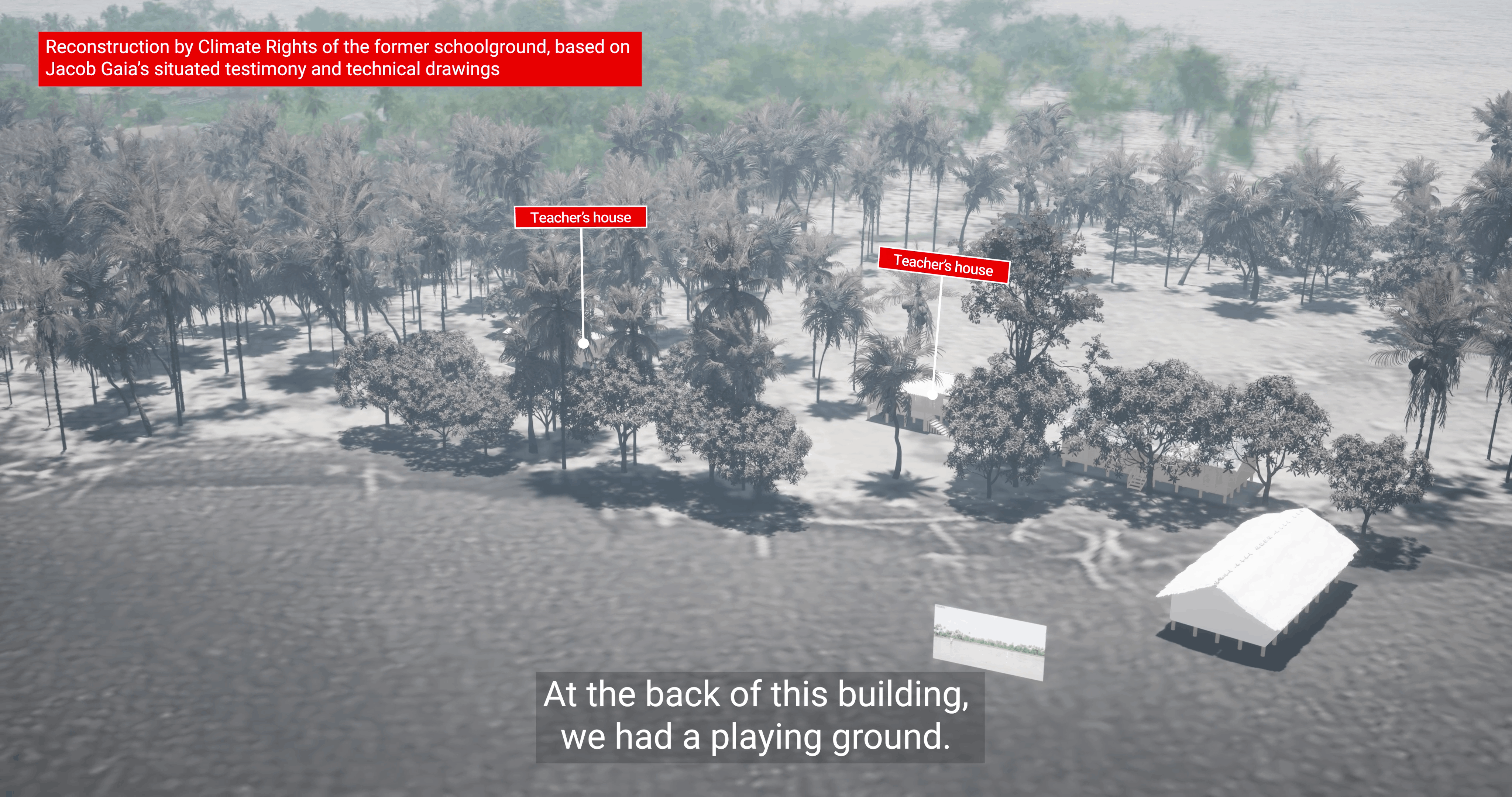
Climate Rights is developing a multimedia report on the impacts of climate change on Veraibari Village in the Kikori Delta, Papua New Guinea (PNG). The investigation aims to establish a material link between climate change and the forced relocation of the Veraibari community due to shoreline erosion. By integrating testimonies within a 3D environment and reconstructing the village before and after climate-induced changes using participatory mapping and geospatial data analysis, the project seeks to produce visual evidence of the lived experiences of the community, including the loss of homes, sacred places, and biodiversity.
Veraibari is a coastal village located at the mouth of the Kikori River—known as Ouro in the local Urama language—where the river flows into the Kikori Delta and meets the Gulf of Papua. The community, part of the Paia'a tribe, is one of only 11 villages where the endangered Urama language is still spoken, with deep ancestral and cultural ties to the land and sea.
The history of Veraibari is deeply intertwined with the impacts of climate change. In the early 1980s, the nearby village of Damaibari—once located behind Veraibari on the other side of the island—was completely destroyed by rising sea levels, forcing the community to relocate to what is now Veraibari. Today, Veraibari remains one of the few surviving villages in the region, but it faces increasing environmental threats.
This province is rich in resources, with extensive logging and extractive industries, including oil and gas projects operated by Exxon and Total. However, communities like Veraibari are left to bear the brunt of climate change impacts, without receiving any meaningful economic benefits from these industries. In Veraibari, these impacts include rising sea levels, storm surges, the previously unexperienced occurrence of cyclones, the decline and extinction of marine life, as well as the degradation of mangroves and other plant species. Freshwater sources have been damaged or contaminated, and the community faces the gradual loss of cultural heritage, social cohesion, and traditional political structures.
The project began as a short multimedia evidence video to support the Melanesian Spearhead Group (MSG) in their oral statements to the UN's International Court of Justice in December 2024. In partnership with INTERPRT and in collaboration with BlueOceanLaw, a field trip was conducted in Veraibari.
The fieldwork was made possible through the longstanding efforts and community engagement of the Piku Biodiversity Network, a local grassroots organization dedicated to environmental conservation of aquatic species and Indigenous advocacy. The project is continuing working closely with the Piku Biodiversity Network to develop an expanded multimedia report.
Our methodology integrates fieldwork with visual-spatial investigations, including remote sensing, GIS modeling, climate science, and legal research. During fieldwork, we video recorded testimonies and organized three days long participatory mapping workshops on the impacts of climate change in Veraibari. We also conducted aerial surveys using UAV drones, along with detailed video and image documentation, which formed the basis for developing an accurate 3D environment in Unreal Engine in collaboration with INTERPRT. This 3D environment integrates testimonies and participatory workshops, visual evidence, and field recordings along with geospatial, environmental, and climate data.
Our next steps focus on extending the video to reconstruct the historical landscape in more detail, develop visual strategies in representing cultural and biodiversity loss based on the participatory workshops and analyzing the role of anthropogenic climate change